
325 What We Wish We’d Known About Infantilizing
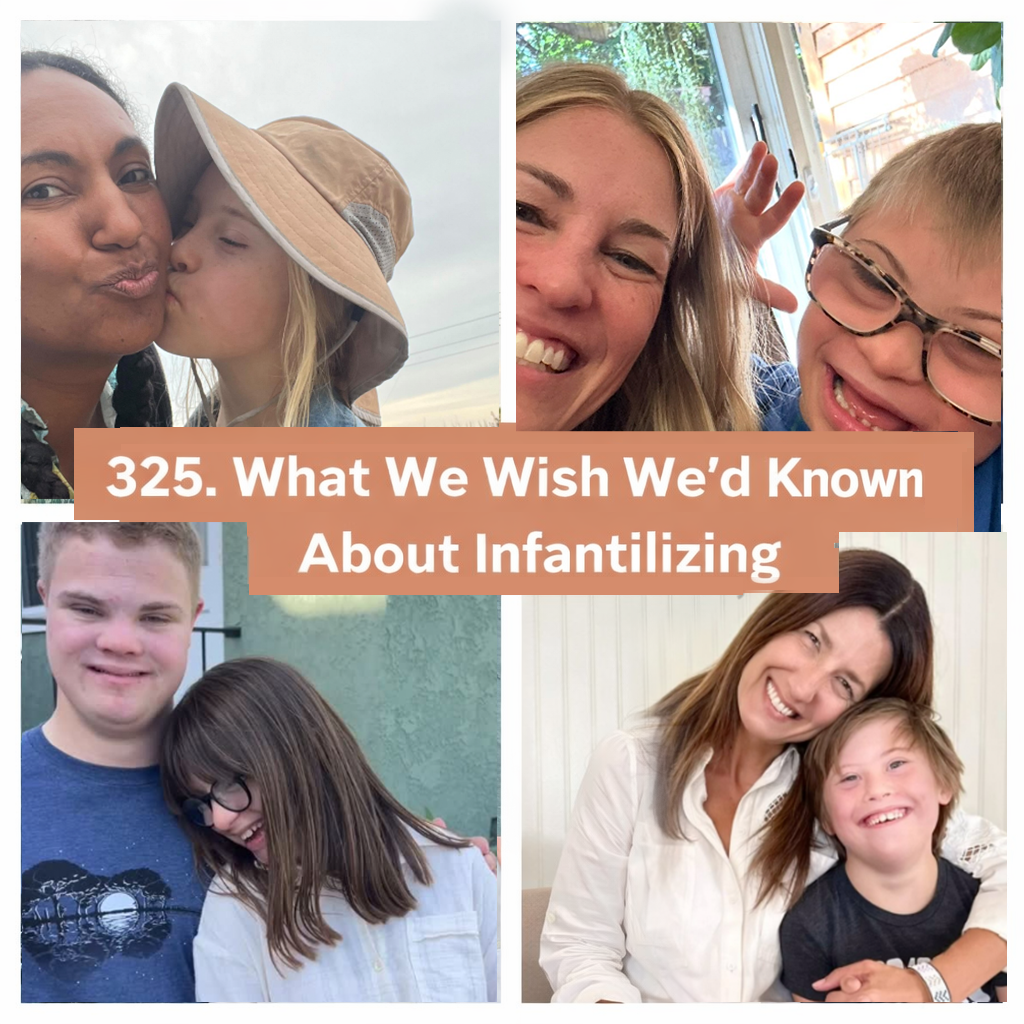
In this episode of were talking about infantilizing — what it is, how it shows up, and why it matters.
To infantilize someone is to treat them as younger or less capable than they are. For people with disabilities, this often shows up in subtle but harmful ways: baby talk, lowered expectations, behavior plans for age-appropriate teen behavior, speaking about someone as if they aren’t in the room, or limiting choices because we assume immaturity.
We share real stories:
When typical high school behavior is labeled as a disability issue
How communication differences get mistaken for lack of intelligence
The risk of tying maturity to verbal skills
The hidden cost of withholding autonomy and choice
How even we, as parents, have had to unlearn assumptions
We talk about the radical assumption of competence — and how dignity starts with how we speak.
Our kids’ age is their age. Their interests don’t define their intelligence. And adults deserve to be treated like adults.
This conversation is nuanced. It’s uncomfortable at times. But it’s necessary.
Let’s raise expectations. Let’s offer real choices. And let’s stop talking to adults like they’re toddlers.
Interested in diving deeper?
We’ve talked about inclusion before — especially in the context of school, IEPs, and advocacy. If you want to explore more episodes with an emphasis on inclusion in education and collaboration, start here:
Episode 78: Building Trust (Not Barriers) w/Your Child’s IEP Team https://www.theluckyfewpodcast.com/episodes/iep-advocacy
Episode 94: IEPs During COVID-19 (ft. Vickie Brett & Amanda Selogie) https://www.theluckyfewpodcast.com/episodes/inclusive-education-project
Episode 270: IEP Success: How to Plan, Communicate, and Collaborate (w/April Rehrig) https://www.theluckyfewpodcast.com/episodes/270-iep-success-how-to-plan-communicate-and-collaborate-april-rehrig
Episode 272: What Do We Wish We Knew Before Our First IEP Meeting? https://www.theluckyfewpodcast.com/episodes/272-what-do-we-wish-we-knew-before-our-first-iep-meeting-heather-avis-mercedes-lara
Episode 273: Breaking Down Barriers: The Parent’s Role in IEP Success (w/Ashley Barlow) https://www.theluckyfewpodcast.com/episodes/273-breaking-down-barriers-the-parents-role-in-iep-success-with-ashley-barlow


CONNECT WITH THE PODCAST
CONNECT WITH HEATHER AVIS
WEBSITE: THE LUCKY FEW OFFICIAL
CONNECT WITH MERCEDES LARA
CONNECT WITH MICHA BOYETT
IG: MICHABOYETT
LISTEN TO THE SLOW WAY
DISCOUNT CODE
Friends, grab your narrative shifting gear over on The Lucky Few Merch Shop and use code PODCAST for 10% off!
HELP US SHIFT THE NARRATIVE
Interested in partnering with The Lucky Few Podcast as a sponsor? Email hello@theluckyfewpodcast.com for more information!
LET’S CHAT
Email hello@theluckyfewpodcast.com with your questions and Good News or Shout Outs for future episodes.